
Our Farm

Our farm
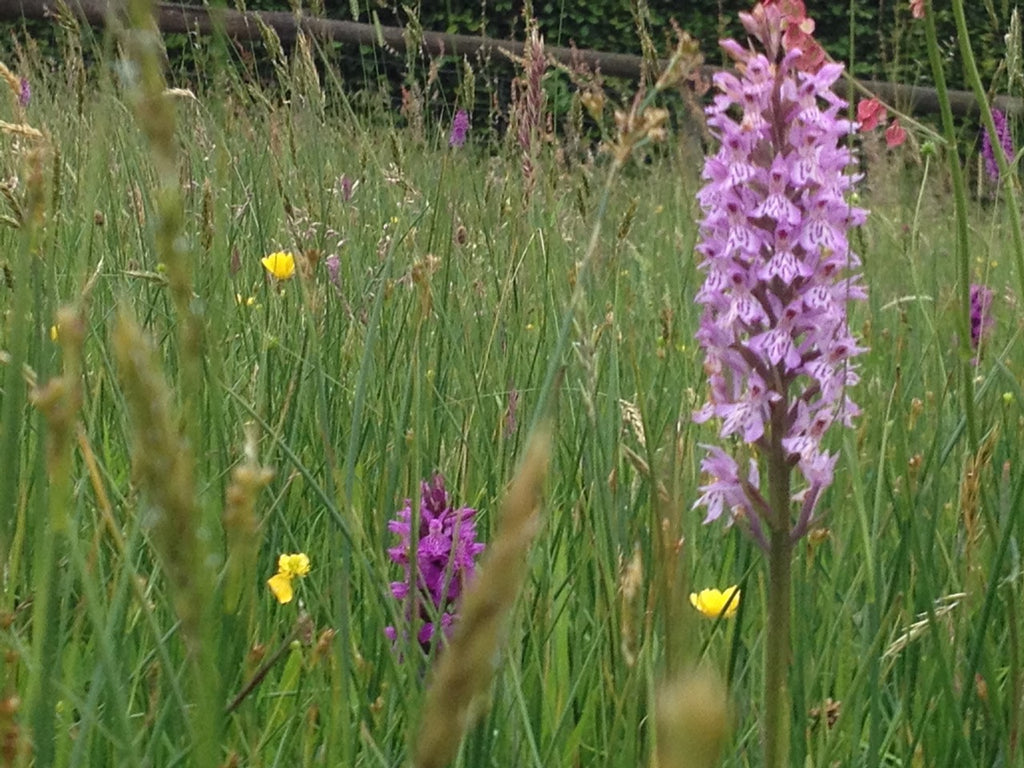
Our small family farm is permanent pasture and hay meadows full of native grasses and wildflowers, bordered by majestic oak trees and ancient hedgerows. The farm's pastures date back to the Middle Ages, with Medieval ridge and furrow systems clearly visible in the fields.
Our species rich grassland supports a myriad of life and helps give our lamb and mutton its award winning taste. We aim to manage the farm in a way that not only benefits our sheep but also supports the wild plants and animals with which we are privileged to share the land. Our small family farm is permanent pasture and hay meadows full of native grasses and wildflowers, bordered by majestic oak trees and ancient hedgerows. The farm's pastures date back to the Middle Ages, with Medieval ridge and furrow systems clearly visible in the fields.
"Langley Chase Organic Farm's autumn lamb, reared slowly on wildflower pasture and hay, recommended by the man behind the menus at London's Ivy and Le Caprice..."
You Magazine, The Mail on Sunday
Wildlife and habitats
The farm's species rich grassland coupled with ancient oaks, ditches and hedges gives the farm the potential to support a wide range of plants and animals. We consider this opportunity a real privilege and are doing our utmost to run the farm in a way that maximises its potential to wildlife. Find out more via the links on the right.
There is nothing more satisfying than seeing buzzards soaring, hawks diving and herons waiting patiently. Having these top predators on the farm means that we're doing our bit to help ensure the food chain on which they depend is thriving.
Many animals on the Farming and Wildlife Advisory Group's Bio Diversity Action Plan are found on the farm. These range from Tree Sparrows, Nut Hatches and Green and Spotted Woodpeckers through to Redwings, Brown Hares, Wrens and Long Tailed Tits. All these animals need different habits, and underline why a farm needs to be managed in its entirety to realise its potential benefit to wildlife and native plant species.
We've taken this whole farm approach and work with the Soil Association, the Countryside Stewardship scheme and the FWAG, to enhance our farm's value to wildlife. We also have an educational programme to help inform children and adults about the countryside and organic farming.
Organic farming fact
UK organic farms contain 85% more plant species, 33% more bats, 17% more spiders and 5% more birds than conventional farms, according to the findings of a five year research programme from Oxford University, the British Trust for Ornithology, and the Centre for Ecology and Hydrology.

Pasture and haymaking
Most of the farm's pastures and have been established for a long time, some date back to the Middle Ages (5th - 16th Century), with Medieval ridge and furrow clearly visible in the fields. Our pastures are herb, native grass and wildflower rich (see the species examples below). This excellent mixture is a haven for wildlife, and also helps give our lamb and mutton its award winning taste. Each year we change which fields are grazed and which are taken for for hay. This rotation widens the diversity of the species in pastures, keeps them fresh and helps control parasites.
Much of our grassland is termed as ‘unimproved’, which means it’s not been enhanced to make it more productive for livestock. Enhancing usually means increasing the percentage of one particular plant species and reducing others. Bug Life, a UK insect charity, says the most important thing for farmland biodiversity is unimproved permanent grassland and a varied patchwork of habitats including woodland and hedgerows. This is the habitat we’re trying to achieve on the farm. If our pastures have a higher diversity of plant species, they are able to support a high number of invertebrates, which in turn can support large bird and mammal populations.
Haymaking
Hay is the main food supply for sheep during the winter. It is vital that it is made correctly. Hay making begins as soon as the grass reaches the right length and when the weather is at its hottest. The grass is cut and left to wilt. During this time it is turned and fluffed to expose as much as possible to the sun and allow the wind to blow through. When the grass is dry the tractor and baler moves in. The baler compacts the grass into manageable sized blocks called bales. These bales are taken from the field, stacked in the barn and kept dry until winter when they are fed to the sheep.
The decline of the hay meadow
Hay meadows, hugely valuable historic features of the UK countryside, have almost vanished. According to NFU Countryside Magazine, 97 per cent of traditional hay meadows have been lost. Just over 120,000 acres remain - only 0.2 per cent of the UK landmass.
Selfheal, Scabious,Yellow Rattle, Salad Burnet and Cat's Ear...some of the delightful grass and plant species in our pastures
Some of the grasses found in our pastures include Timothy, Meadow Fescues, Crested Dogstail, Meadow Foxtail, Yorkshire Fog, Smooth Meadow Grass, Annual Meadow Grass, False Brome, Common Bentgrass and Sheeps Fescue.
Flowers include Common Knapweed, Oxeye Daisy, Selfheal, Speedwell, Primrose, Bluebell, Hawksbeard, Dandelion, Daisy, Cats Ear, Yarrow, Cuckooflower, Salad Burnet, Sheeps Sorrel, Ribwort, Buttercup, Ladys Bedstraw, Spear Thistle, Creeping Thistle, Dock, Ribwort Plantain, Greater Plantain, Red and White Clovers
Often we undertake ‘overseeing’ with wild flower seeds after the hay has been made. This process helps keep the wildflower levels high and pastures diverse. Wildflowers, grasses and herbs are sown and include: Common Sorrel, Rough Hawkbit, Ox-eyed daisy, Field Scabious, Birds Foot Trefoil, Black Knapweek, Lady’s Bedstraw, Meadow Vetchling, Yarrow and Yellow Rattle.